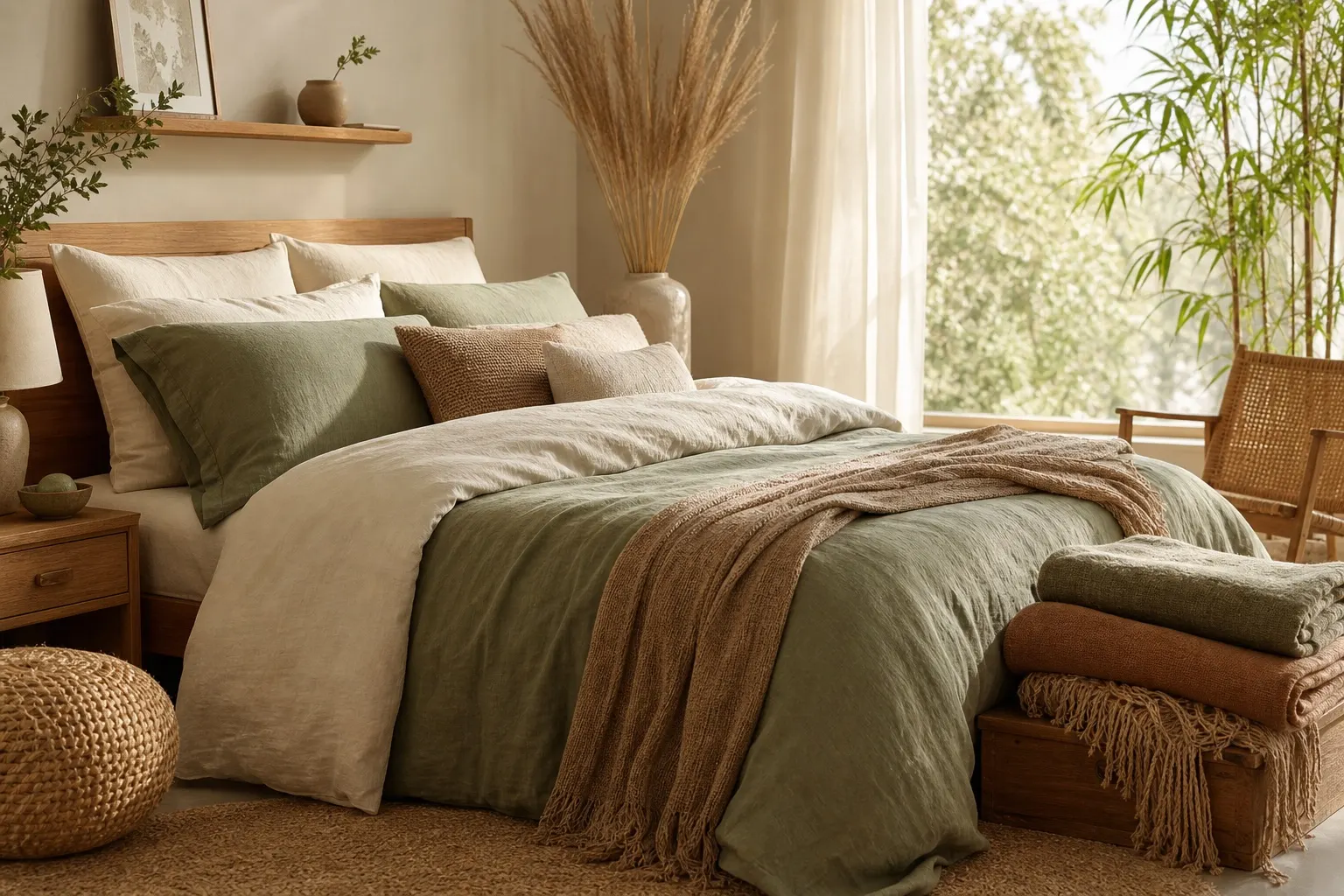
Living a more sustainable life doesn't stop at the kitchen or bathroom — your bedroom is where you spend a third of your life, and the materials surrounding you during sleep matter. Eco-friendly bedding made from organic cotton, bamboo, or natural fibers keeps harmful chemicals away from your skin and out of the environment.
This post contains affiliate links. We may earn a small commission at no extra cost to you. TL;DR: The best eco-friendly bedding swaps are GOTS-certified organic cotton sheets, natural latex or wool pillows, and non-toxic mattress protectors. These reduce your exposure to pesticides and synthetic chemicals, sleep more comfortably, and support ethical manufacturing — without necessarily breaking the bank.Why Your Bedding Choices Matter
Most conventional bedding is made from cotton grown with heavy pesticide use. The U.S. EPA notes that conventional cotton farming relies on some of the most toxic agricultural chemicals in use today. Synthetic fabrics like polyester can off-gas volatile organic compounds (VOCs) into your bedroom air throughout the night.
Eco-friendly bedding addresses both problems at once. Certified organic fabrics use no harmful pesticides, and natural materials like cotton, linen, and bamboo breathe far better than synthetics — meaning a cooler, more comfortable sleep.
What to Look for on the Label
Not all "natural" or "green" bedding claims are equal. Watch for these third-party certifications:
- GOTS (Global Organic Textile Standard) — the gold standard for organic textiles
- OEKO-TEX Standard 100 — certifies the fabric is tested free from harmful substances
- Fair Trade Certified — ensures ethical labor practices throughout the supply chain
Best Eco-Friendly Sheet Sets
Organic cotton sheets are the single easiest first swap for a greener bedroom. They're softer than conventional cotton, get even softer with each wash, and are free from pesticide residues that can irritate sensitive skin.
A thread count of 200–400 is the sweet spot for organic cotton — anything higher often relies on chemical finishes to achieve that ultra-smooth feel.
Thread Count vs. Fiber Quality
Higher thread count doesn't automatically mean better sheets. A 300-thread-count GOTS-certified sheet will outlast and outperform a 600-thread-count sheet treated with chemical softeners. Focus on the certification, not the number on the tag.
A well-reviewed organic cotton sheet set is one of the best investments you can make for your sleep health and overall bedroom air quality.
Natural Pillows: Ditch the Polyester Fill
Most budget pillows are stuffed with synthetic polyester fill — essentially plastic fibers. They trap heat, flatten quickly, and off-gas chemicals over time. Natural alternatives are better in every measurable way.
Top natural pillow fills to consider:- Shredded natural latex — responsive, durable, naturally resistant to dust mites
- Organic cotton fill — breathable, hypoallergenic, and widely available
- Buckwheat hulls — firm, fully adjustable, and compostable at end of life
- Wool — naturally temperature-regulating and moisture-wicking
Caring for Natural Pillows
Natural pillows last longer when aired out regularly. Set them in sunlight for an hour a few times a year — UV light naturally neutralizes odors and refreshes the fill without any chemicals. Many can also be spot-cleaned with mild, natural soap.
A natural latex pillow is an especially worthwhile upgrade if you sleep hot — latex runs notably cooler than memory foam and holds its shape for years.
Non-Toxic Mattress Protectors
Even if you can't yet afford an organic mattress, a non-toxic mattress protector creates a meaningful barrier between you and whatever is off-gassing from a conventional mattress. It's the highest-impact, lowest-cost upgrade in a non-toxic sleep setup.
Look for waterproof mattress protectors made from organic cotton terry with a natural rubber or OEKO-TEX certified backing — avoid PVC or vinyl, which can off-gas plasticizers into your breathing zone.
An organic cotton mattress protector is an affordable upgrade that dramatically improves air quality around your sleep surface.
Should You Replace Your Entire Mattress?
If your mattress is older than 7–8 years, an organic or natural latex mattress is worth considering. But it's a significant investment — a non-toxic protector is the smart first step that delivers most of the health benefit at a fraction of the cost.
Bamboo Bedding: A Sustainable Alternative
Bamboo is one of the most sustainable crops on earth. It grows rapidly without pesticides, sequesters carbon while growing, and regenerates from its own root system without replanting. Bamboo-derived fabrics are incredibly soft, moisture-wicking, and temperature-regulating.
The Caveat on Bamboo
Not all bamboo fabric is equally sustainable. Viscose from bamboo can involve chemical-intensive processing. Look for bamboo lyocell (sometimes labeled Tencel bamboo), which uses a closed-loop manufacturing process that recycles 99% of the solvents involved.
A bamboo lyocell duvet cover pairs beautifully with organic cotton sheets and makes a noticeable difference on warm nights or if you run hot while sleeping.
Building a Non-Toxic Bedroom Over Time
You don't need to replace everything at once. A practical, budget-friendly order of operations:
- First: Swap in organic cotton or bamboo lyocell sheets and pillowcases
- Next: Add a non-toxic mattress protector
- Then: Replace pillows with natural fill as your old ones wear out
- Eventually: Consider an organic or natural latex mattress
Small swaps compound into a significantly cleaner sleep environment over 12–18 months. If you're already reducing waste throughout your home, check out our guide on reusable products that actually save you money for more practical swaps that cut both waste and expenses.
FAQ
What makes bedding truly eco-friendly?
Truly eco-friendly bedding is made from natural fibers — organic cotton, linen, bamboo lyocell, or natural latex — grown or processed without harmful pesticides or toxic chemicals, and certified by a third party like GOTS or OEKO-TEX. Durability matters too: a longer lifespan means less waste over time.
Is organic cotton bedding worth the extra cost?
Yes, especially for sheets and pillowcases in direct contact with your skin for 7–9 hours every night. Organic cotton sheets are more durable than conventional options — they soften with age rather than pilling — making the cost difference much smaller when calculated over a 5-year lifespan.
Can I find eco-friendly bedding on a budget?
Absolutely. Watch for sales from brands carrying OEKO-TEX certification, which doesn't require organic farming but ensures no harmful substances are present. Bamboo sheet sets are often competitively priced with mid-range conventional options, and filtering for OEKO-TEX on Amazon surfaces solid budget-friendly choices.