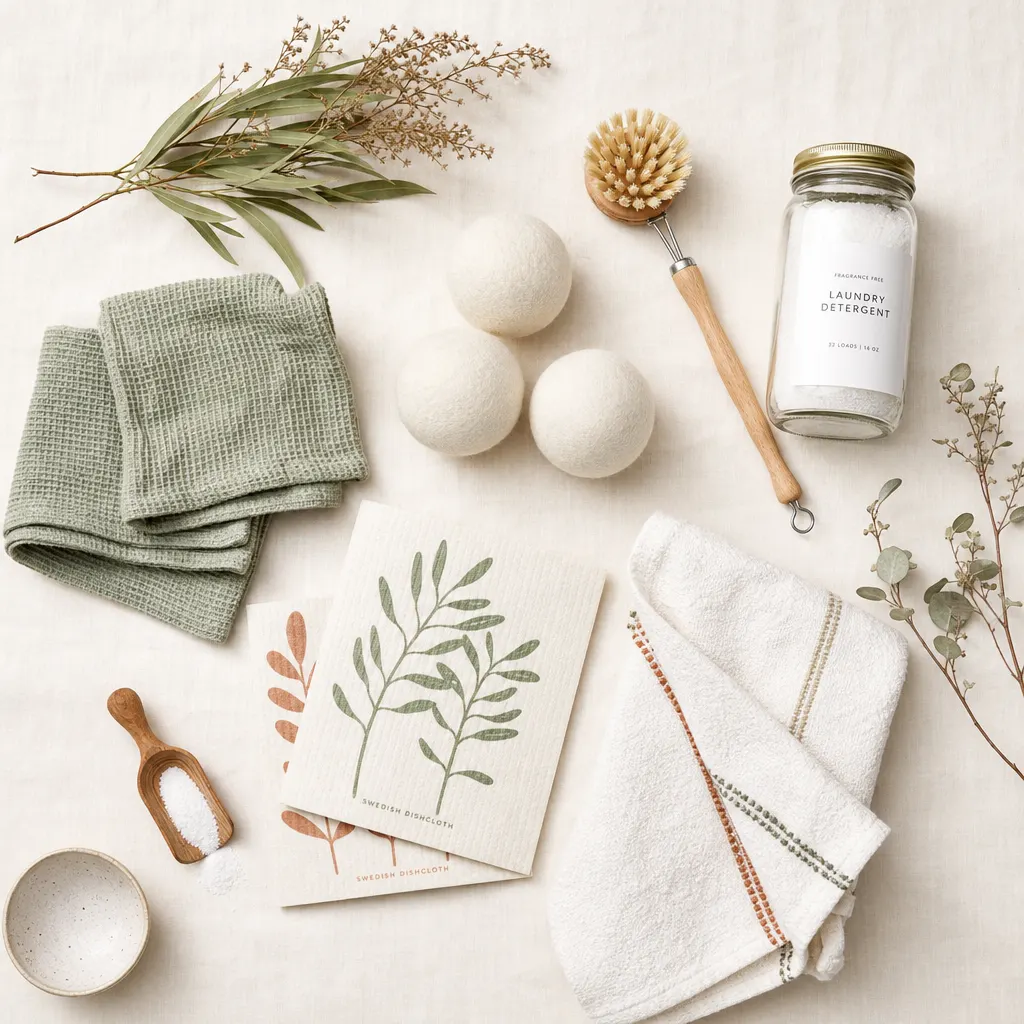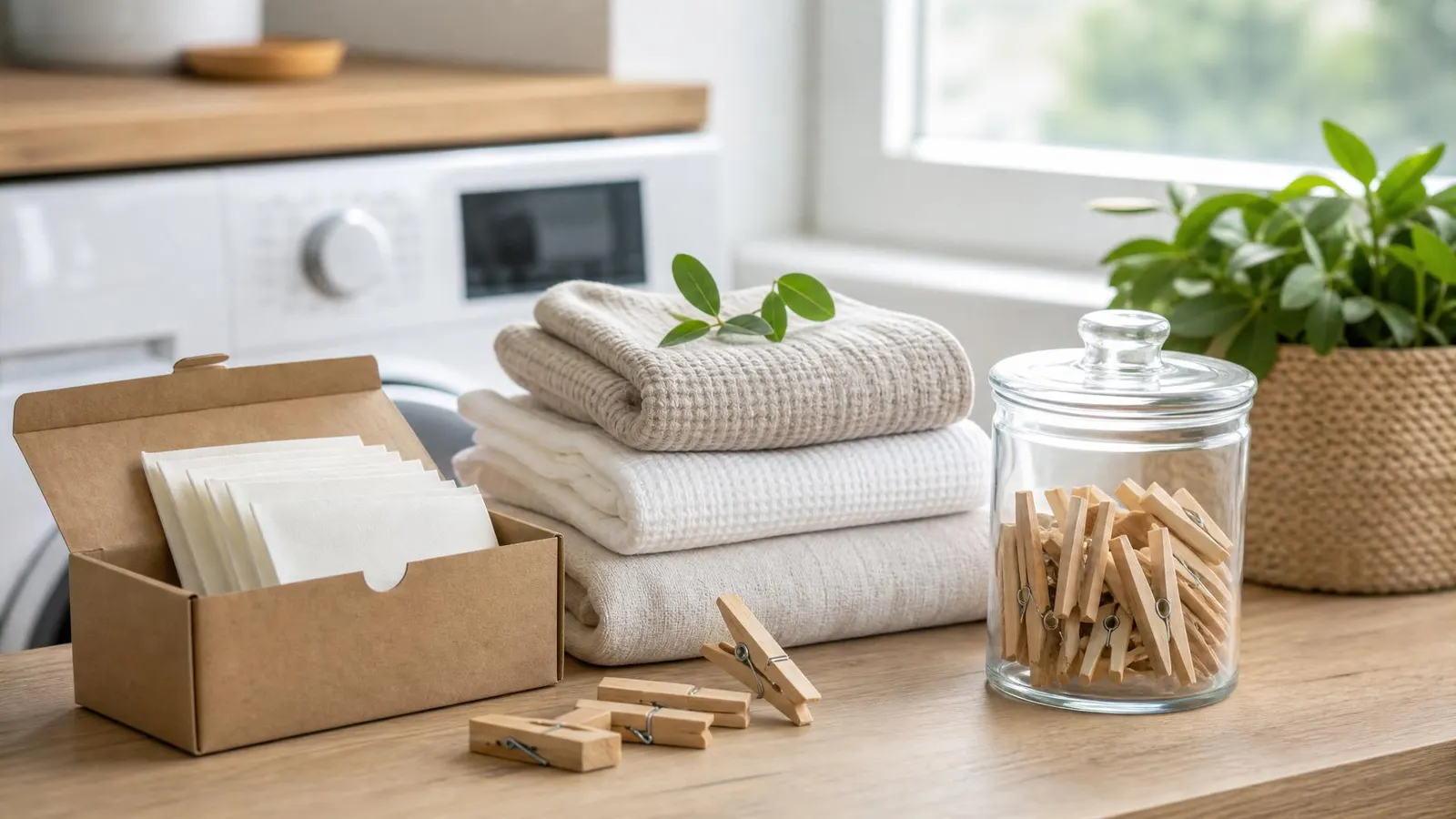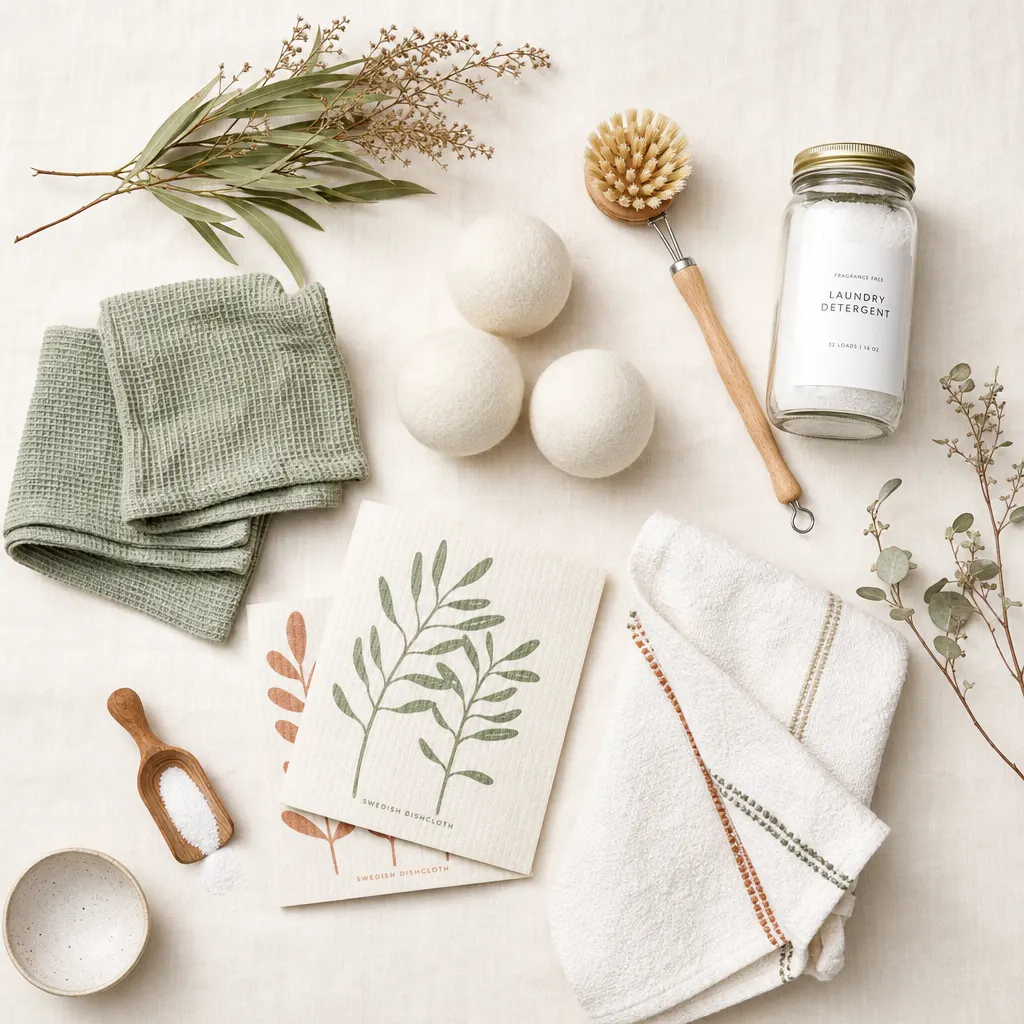
Eco-friendly cleaning products can make an allergy-prone home easier to live in, but only if you skip the scented greenwashing and choose formulas that actually reduce irritants. The best starting kit is simple: an unscented dish soap, a fragrance-free all-purpose cleaner, oxygen bleach, microfiber cloths, baking soda, and white vinegar used correctly.
This post contains affiliate links. We may earn a small commission at no extra cost to you. TL;DR: For allergy-prone homes, the safest eco-friendly cleaning products are fragrance-free, dye-free, low-VOC, and clearly labeled. Start with unscented concentrates, washable cloths, and simple mineral-based scrubbers before buying a dozen specialty sprays. Avoid "natural fragrance," aerosol sprays, and essential-oil-heavy formulas if anyone in the house reacts to scents.This guide focuses on products that clean well, reduce plastic waste, and do not turn your home into a cloud of lavender mist.
What Allergy-Friendly Actually Means
"Natural" does not automatically mean gentle. Essential oils, plant terpenes, and strong botanical fragrances can still trigger headaches, asthma symptoms, skin irritation, or watery eyes. For an allergy-prone home, the better filter is boring but useful:
- Fragrance-free, not merely unscented
- Dye-free
- Low-VOC
- No aerosol format
- Transparent ingredient list
- Concentrated or refillable packaging where possible
The EPA Safer Choice label is a good place to start because it screens ingredients for human health and environmental criteria. It is not the only trustworthy signal, but it is more useful than vague front-label claims like "green," "pure," or "plant powered."
If you already use a DIY eco-friendly cleaning product, keep it simple. Vinegar, baking soda, and castile soap each have a place, but they are not interchangeable, and mixing them randomly usually makes a weaker cleaner.
The Core Cleaning Kit
You do not need a separate bottle for every surface. A tight kit is cheaper, less irritating, and easier to keep stocked.
Fragrance-free dish soap: A gentle dish soap handles dishes, counters, cabinet fronts, and many washable surfaces. A few drops in warm water is enough. If you prefer concentrates, look for an unscented dish soap refill instead of buying a new pump bottle every month. Fragrance-free all-purpose cleaner: Use this for bathroom counters, sealed surfaces, and quick cleanups. Choose a concentrate or tablet system if you can tolerate the formula. The eco win comes from shipping less water and reusing the spray bottle. Oxygen bleach: For sinks, tubs, grout, tea stains, and dingy laundry, oxygen bleach is one of the most useful low-irritation cleaners. It has no chlorine smell and works with hot water and a little dwell time. Baking soda: This is still the best cheap scrub for sinks, tubs, and stovetops that need gentle abrasion. Buy the larger bag, decant a little into a shaker jar, and keep the rest sealed. White vinegar: Vinegar is useful for mineral buildup, glass, and some deodorizing jobs. Do not use it on natural stone, and do not mix it with bleach. A gallon jug creates less packaging per use than small bottles. Washable cloths: A stack of microfiber cleaning cloths replaces paper towels for most cleaning. If microfiber shedding bothers you, use cotton bar towels for dry dusting and general wiping, then save microfiber for glass and mirrors.Products to Avoid When Allergies Are the Problem
The easiest way to improve indoor air is often to remove products, not add better ones.
Skip heavily scented multipurpose sprays, plug-in air fresheners, fragranced disinfecting wipes, powdered carpet deodorizers, and aerosol bathroom cleaners. These products can linger in fabrics and air long after the room looks clean.
Be careful with essential oils, too. They sound wholesome, but they are concentrated fragrance compounds. If someone in your household is scent-sensitive, a "tea tree and eucalyptus" cleaner may be worse than a plain conventional product.
Also avoid antibacterial everything. For normal household cleaning, soap, friction, and regular laundering are enough most of the time. Save disinfectants for specific situations: illness in the home, raw meat contamination, toilet areas, or instructions from a healthcare provider.
A Room-by-Room Low-Irritation Routine
Kitchen: Use dish soap and hot water for counters, cabinet pulls, appliance handles, and the table. Use baking soda for stuck-on sink grime. Use oxygen bleach for stained mugs, cutting boards, and dingy dishcloths. Bathroom: Let products sit before scrubbing. Dwell time does more than extra force. Use oxygen bleach paste on grout, vinegar on mineral deposits, and a fragrance-free all-purpose cleaner for counters and sealed surfaces. Bedroom: Dust with a damp cloth so particles do not float around. Wash pillowcases weekly. If dust is a major trigger, a HEPA vacuum for allergies matters more than another cleaning spray. Laundry: Choose fragrance-free detergent and skip dryer sheets. Wool dryer balls are fine if no one reacts to wool; otherwise, use nothing. Clean lint traps and washer seals regularly so musty smells do not send you reaching for scent boosters.How to Buy Without Creating More Waste
The low-waste version of allergy-friendly cleaning is not a perfect pantry of amber glass bottles. It is a system you will actually repeat.
Buy concentrates when the formula works for your household. Reuse spray bottles until the trigger fails. Choose cardboard-boxed powders over plastic tubs when practical. Buy larger sizes of the products you use constantly, but do not stockpile experimental cleaners.
For tools, start with washable cloths, a stiff scrub brush, a refillable spray bottle, and a small bucket. A glass spray bottle set is nice, but reused bottles are perfectly fine if they are clearly labeled and never previously held bleach.
The real test is simple: if a product makes cleaning faster, reduces irritation, and prevents repeat plastic purchases, keep it. If it just looks greener under the sink, let it go.
FAQ
Are eco-friendly cleaning products better for allergies?
Sometimes. The best allergy-friendly cleaners are fragrance-free, low-VOC, and simple. A scented eco cleaner can still bother sensitive people, even when the ingredients are plant-derived.
Is vinegar safe for every surface?
No. Vinegar can damage marble, limestone, travertine, some grout, and certain appliance finishes. Use it for glass, mineral buildup, and deodorizing jobs where the surface is acid-safe.
Do I need disinfectants in an eco-friendly home?
Occasionally, yes. Disinfectants are useful for illness, toilet areas, and raw meat cleanup. For everyday dust, grease, and grime, cleaning with soap, water, and friction is usually enough.
---
An allergy-prone home does not need harsher cleaning. It needs fewer irritants, better habits, and products that do their job without leaving a scent trail behind. Start with the quietest formulas first, then only add specialty cleaners when a real problem remains.