Being a pet parent is one of life's greatest joys, but it often comes with a surprising amount of waste. From plastic food packaging to disposable toys, our furry friends can have a larger environmental paw-print than we realize. The good news is that providing the best care for your pet and being kind to the planet can go hand-in-hand.
This post contains affiliate links. We may earn a small commission at no extra cost to you.Adopting an eco-friendly pet care routine doesn't require a huge budget or drastic lifestyle changes. It's about making conscious, sustainable swaps. This guide will help you navigate everything from sustainable pet food and low-waste toys to greener grooming and waste management, ensuring your pet lives a happy, healthy, and environmentally-friendly life.
Sustainable Paws: Choosing Eco-Friendly Pet Food
What we feed our pets has a significant impact on their health and the environment. The production of meat-based pet food requires vast amounts of land, water, and energy.
Quick Tips for Sustainable Pet Food:- Look for sustainable sourcing: Choose brands that use ethically sourced ingredients, such as free-range chicken or sustainably farmed fish.
- Consider alternative proteins: Brands are now incorporating insect protein, which is highly nutritious and requires far fewer resources to produce than traditional livestock.
- Buy in bulk: Purchasing larger bags of dry food reduces packaging waste. Store it in an airtight container to maintain freshness.
- DIY Treats: Bake your own pet treats using simple, natural ingredients like pumpkin, peanut butter, and oats. This avoids plastic packaging and gives you full control over what your pet eats.
Playtime for the Planet: Low-Waste Toys and Enrichment
Pets, especially dogs and cats, need stimulation, but the endless cycle of cheap plastic toys can fill up landfills quickly. Opting for durable, eco-friendly toys is better for the planet and often safer for your pet.
Look for toys made from natural or recycled materials like hemp, rubber, or recycled plastics. A high-quality, durable chew toy might cost more upfront but will outlast a dozen cheaper alternatives, saving you money and reducing waste. You can also create DIY enrichment toys, like hiding treats in a cardboard box or a rolled-up towel, to keep your pet engaged without buying something new.
A Greener Grooming Routine
From shampoos to brushes, grooming products can be a source of plastic waste and harsh chemicals. Making a few simple swaps can create a healthier routine for your pet and the planet.
- Natural Shampoos: Look for pet shampoos with simple, biodegradable ingredients. Better yet, find a shampoo bar which eliminates the need for a plastic bottle entirely.
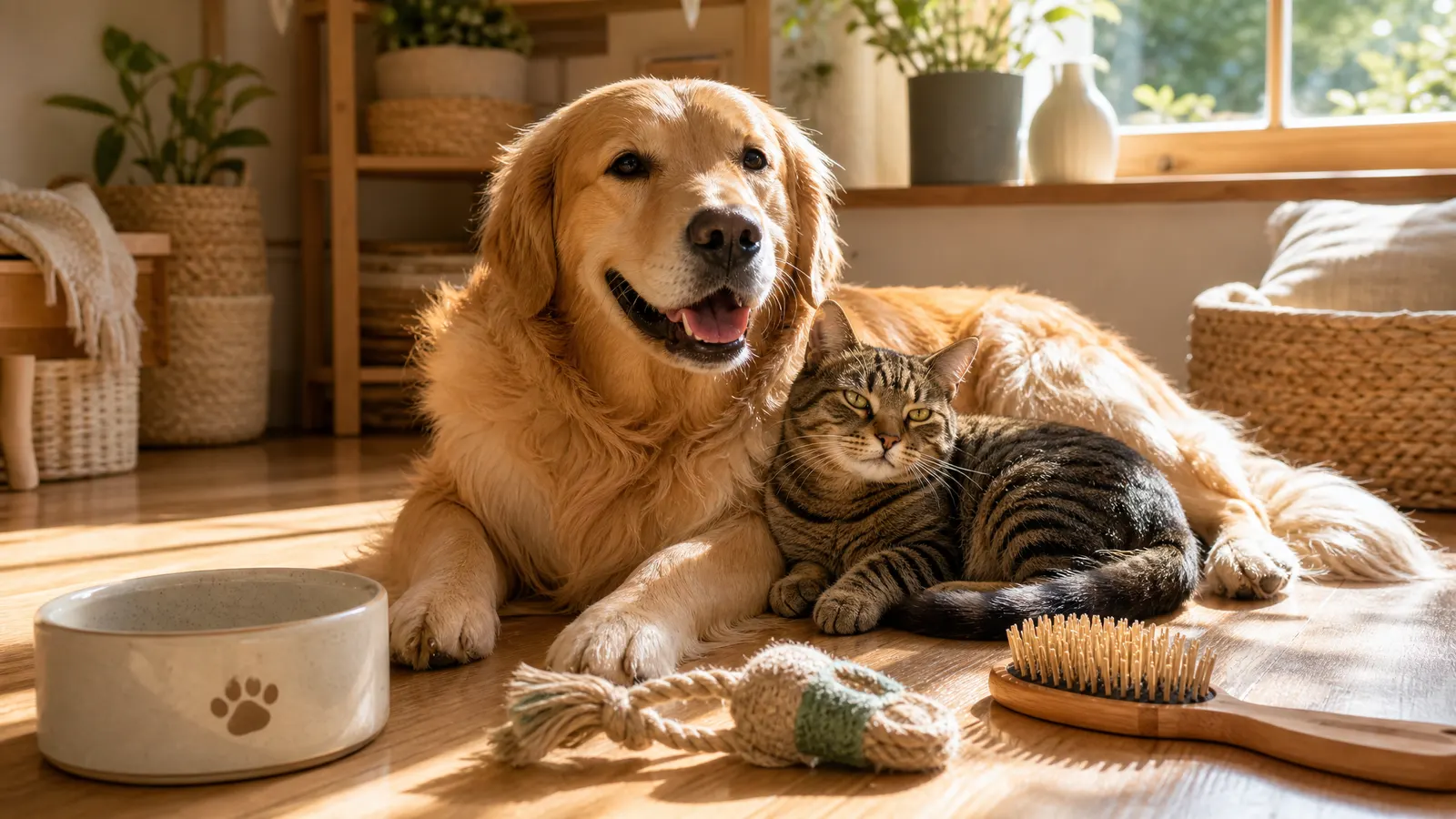
- Sustainable Brushes: Choose grooming tools made from sustainable materials like bamboo. A sturdy bamboo pet brush works just as well as its plastic counterpart and is completely biodegradable.
- DIY Paw Balm: Protect your dog's paws in the winter and summer with a simple homemade balm made from coconut oil, shea butter, and beeswax.
Managing Pet Waste the Eco-Conscious Way
Pet waste is an unavoidable part of being a pet parent. While it's a messy topic, making a conscious choice can make a big difference.
Always pick up after your dog, but consider what you're picking it up with. Standard plastic bags can take centuries to break down. Instead, opt for compostable or biodegradable pet waste bags, which are designed to decompose much faster. For cat owners, look for litter made from natural, biodegradable materials like wood, paper, or corn instead of clay-based litters, which are often strip-mined.
For more tips on green cleaning, check out our guide on DIY eco-friendly cleaning products, which has recipes that are safe to use around pets.
---
Frequently Asked Questions
Are "biodegradable" pet waste bags really better for the environment?
Yes, but with a catch. For a biodegradable or compostable bag to break down properly, it needs oxygen and light, which are often lacking in a sealed landfill. However, they are still a better alternative to traditional plastic bags as they are made from renewable resources (like cornstarch) and don't contain the same harmful petroleum-based chemicals.
How can I reduce my pet's carbon paw-print through their diet?
Choosing pet foods with chicken or fish over red meat like beef or lamb can significantly lower their carbon footprint, as these proteins require fewer resources to produce. Incorporating sustainable ingredients and buying from local producers when possible also helps. The Pet Sustainability Coalition offers great resources for finding environmentally responsible brands.
What are some safe, natural cleaning products for pet messes?
A simple solution of equal parts water and white vinegar is a fantastic all-purpose cleaner for many pet messes and helps neutralize odors. For tougher stains on carpets, a paste of baking soda and water can be effective. Always test on a small, inconspicuous area first.