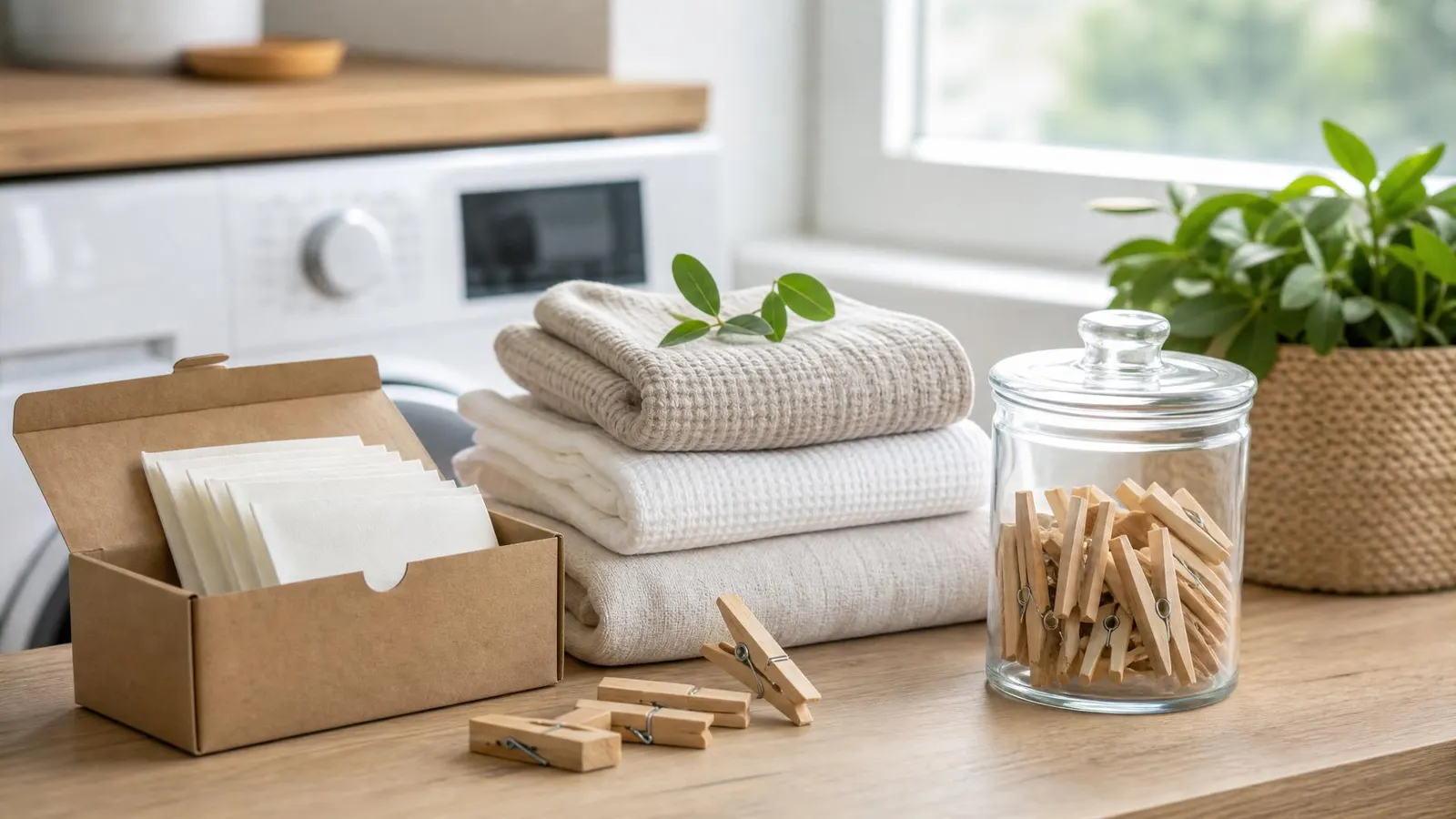
Laundry detergent sheets can be a smart low-waste swap if you choose a formula that works in your machine, dissolves fully in your water temperature, and arrives in recyclable packaging. Quick answer: start with a small box, test sheets on everyday laundry before towels or workout clothes, and keep a stain treatment plan for the messes sheets are not built to handle.
This post contains affiliate links. We may earn a small commission at no extra cost to you.The appeal is obvious: no heavy plastic jug, no sticky cap, no measuring, and less storage space. But laundry is one of those household routines where "green" only helps if the product actually performs. A sheet that leaves odor behind is not sustainable if you have to rewash the load. The goal is a boring, repeatable wash-day system that cuts waste without creating extra work.
How Laundry Detergent Sheets Work
Laundry detergent sheets are concentrated detergent pressed into thin, dry strips. You tear off one sheet or half sheet, place it in the drum or dispenser according to the brand directions, and let water dissolve it during the wash cycle.
The biggest environmental advantage is packaging. Many sheets come in slim cardboard envelopes instead of large plastic jugs. They are also lighter to ship because they do not include the water that makes up most liquid detergent. That lower weight can reduce transportation impact, especially if you already order other household refills online.
Performance varies by formula. Some sheets handle light daily laundry beautifully but struggle with oily food stains, heavy sweat, cloth diapers, or very hard water. That does not make them useless. It means they belong in the same category as any other detergent: test before committing to a bulk box.
If you are comparing cleaning claims, the EPA Safer Choice program is a useful reference for understanding ingredient and product standards. Certification is not the only thing that matters, but it is better than relying on vague "natural" language.
What to Check Before You Buy
Start with water temperature. Some detergent sheets dissolve more reliably in warm water than cold water. If your household washes mostly cold, look for brands that specifically say they work in cold cycles. You can also place the sheet in the drum first, under the clothes, so it gets direct water contact.
Check whether the product is fragrance-free, lightly scented, or strongly scented. Fragrance is personal, and "fresh linen" can become overwhelming in a small apartment. If anyone in your home has sensitive skin, fragrance-free is the safer starting point.
Look at the dose. A tiny apartment washer may only need half a sheet. A large, dirty load may need a full sheet or one and a half. More is not always better; overdosing can leave residue on clothes and inside the machine.
Packaging matters too. Choose plastic-free boxes or mailers when possible, but do not ignore practical durability. If a flimsy envelope arrives ripped and damp, the sheets may clump before you use them. A sturdy cardboard sleeve is usually the sweet spot.
For a first test, try a small pack of laundry detergent sheets instead of a giant subscription bundle. If you already use scent-free products, search specifically for fragrance-free laundry sheets.
Build a Low-Waste Laundry Routine Around Them
Detergent is only one part of wash day. You will get better results, and save more money, by pairing sheets with a few basic habits.
Wash full loads when you can, but do not pack the washer so tightly that clothes cannot move. Detergent needs water and agitation to work. A stuffed machine leads to dull fabric, lingering odor, and rewashing.
Use cold water for most normal loads. Cold washing saves energy and is gentler on many fabrics. Reserve warm water for sheets, towels, heavy soil, or anything that needs a deeper clean.
Treat stains before they go into the washer. Detergent sheets are not magic erasers. Keep one stain stick, oxygen booster, or simple soap bar near the hamper. A compact laundry stain remover stick can last months and prevents unnecessary rewashes.
Skip dryer sheets if possible. Wool dryer balls reduce static for many loads and can help separate fabric so items dry more evenly. They are not essential, but a set of wool dryer balls is one of the more useful laundry swaps if you use a dryer often.
For more small-home swaps, see our guide to sustainable household swaps.
When Detergent Sheets Are Not the Best Fit
Laundry sheets are convenient, but they are not the answer for every household. If you have extremely hard water, frequent grease stains, or athletic gear that holds odor, you may need a stronger liquid detergent, a powder detergent, or a booster.
They can also be less ideal for shared laundry rooms where machines are unpredictable. If the washer barely fills or uses a very short cycle, the sheet may not dissolve completely. In that case, tear the sheet into smaller pieces before adding it, or dissolve it briefly in a cup of warm water before the load.
Price is another tradeoff. Some sheets cost more per load than basic powder detergent. That may still be worth it if storage space, plastic reduction, and convenience matter to you. But if your main goal is the lowest cost, compare per-load pricing carefully before subscribing.
The most sustainable product is the one that fits your real routine. If sheets work for everyday loads and powder handles tougher laundry, using both is still a practical low-waste system.
FAQ
Are laundry detergent sheets actually eco-friendly?
They can be. Their strongest advantages are lighter shipping weight and reduced plastic packaging. The full impact depends on the formula, packaging, how well they clean, and whether they prevent or cause rewashing.
Do detergent sheets work in cold water?
Many do, but not all dissolve equally well. For cold cycles, put the sheet in the drum before clothes, avoid overloading the washer, and test with a normal load before washing bulky towels.
Are laundry sheets safe for sensitive skin?
Some are, especially fragrance-free formulas, but sensitive skin varies. Choose unscented sheets, avoid optical brighteners if they bother you, and wash one small load before switching the whole household.
---
Laundry detergent sheets are best treated as a careful swap, not a personality change. Test one box, keep a stain tool nearby, wash full cold loads when appropriate, and let the product prove it belongs in your routine.