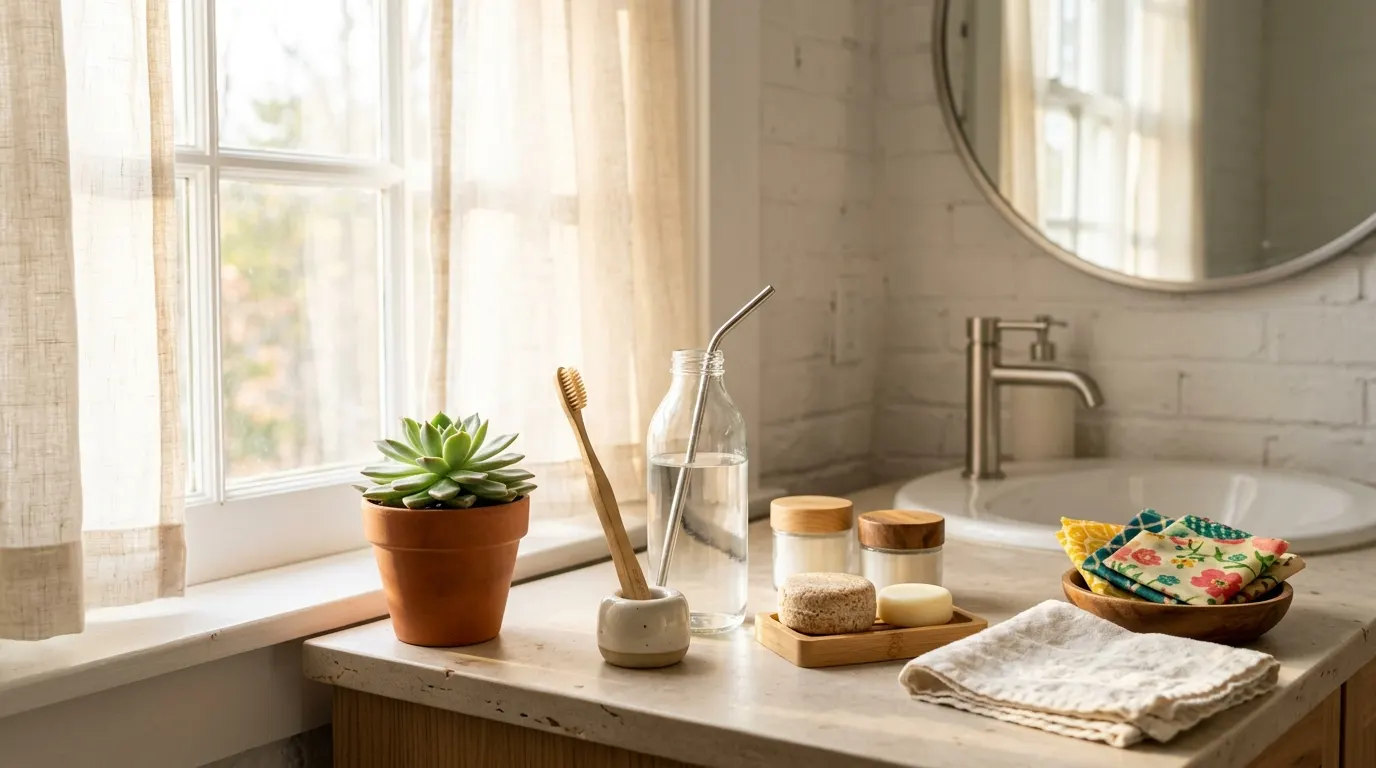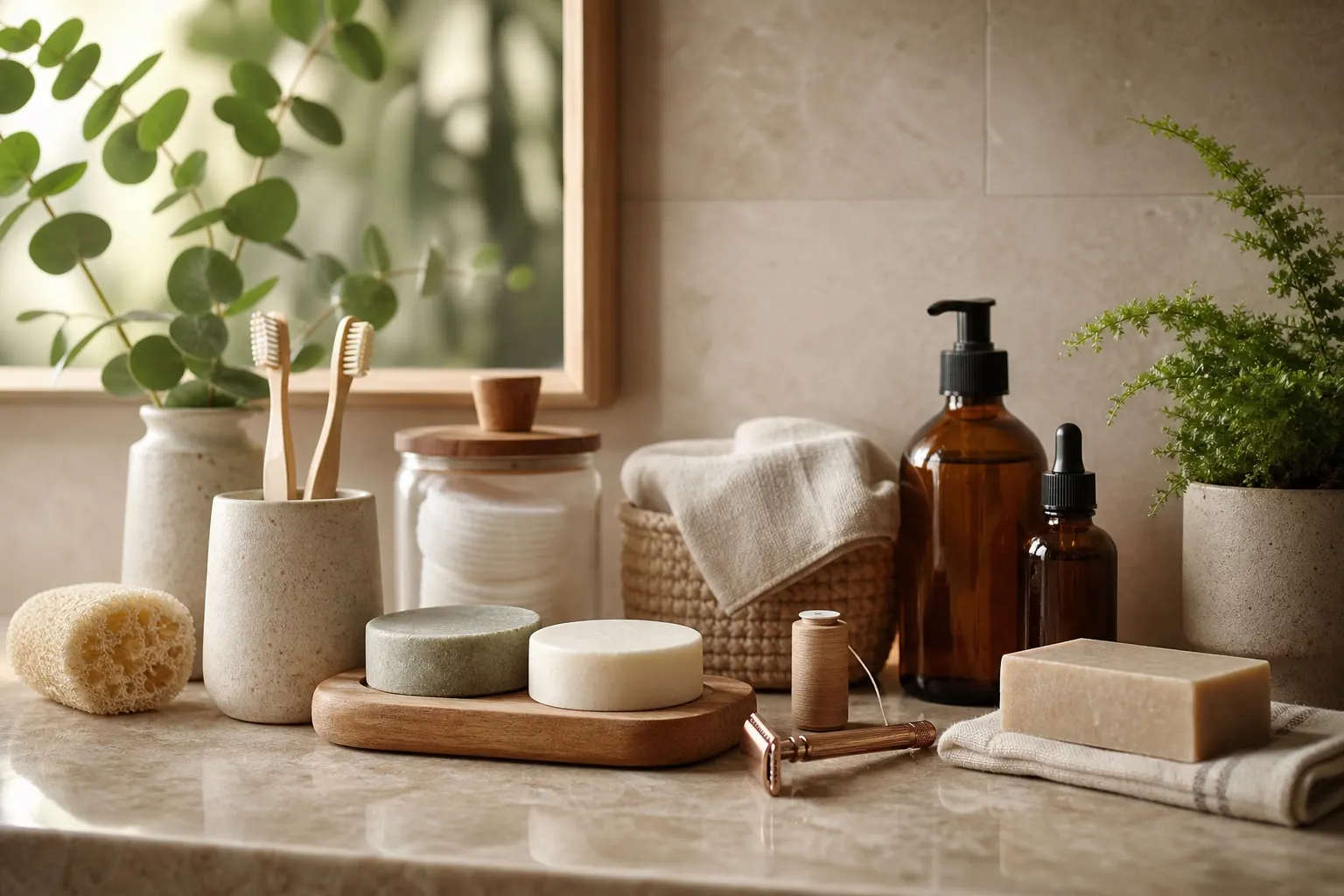
The average American bathroom generates about 25 pounds of plastic waste per year — most of it from single-use bottles, tubes, and packaging that get tossed without a second thought.
This post contains affiliate links. We may earn a small commission at no extra cost to you. TL;DR: A plastic-free bathroom doesn't require a full renovation. Swap your liquid products for solid bars, choose refillable alternatives, and ditch the disposables. Most swaps pay for themselves within 3–6 months — and a few actually work better than what you're replacing.Why Plastic-Free Is Different From Zero Waste
Zero waste means sending nothing to landfill. Plastic-free means specifically eliminating plastic packaging — a narrower but surprisingly powerful goal.
Plastic is uniquely damaging because most bathroom plastics (shampoo bottles, conditioner pumps, lotion tubes) are technically recyclable but almost never actually recycled. The EPA estimates that only 8.7% of plastic waste in the U.S. is recycled annually. Focusing on elimination rather than recycling is the more honest approach.
Start With the High-Volume Offenders
Audit your bathroom before you shop. Shampoo, conditioner, body wash, and face wash are your biggest plastic generators — most people replace these bottles every 4–8 weeks. These are where plastic-free swaps have the most impact.
Swap 1: Shampoo and Conditioner Bars
Solid shampoo bars are the single highest-impact swap in a plastic-free bathroom. One good bar replaces 2–3 plastic bottles and lasts 60–80 washes when stored dry between uses.
The learning curve is real: your hair may feel waxy during the first 1–2 weeks as it adjusts from silicone-based products to natural alternatives. Push through it — most people find their hair is healthier and less greasy long-term.
What to Look For
Avoid bars with SLS (sodium lauryl sulfate) if you have a sensitive scalp. Look for options with conditioning ingredients like shea butter or argan oil. Shampoo and conditioner bars on Amazon now come in a wide range of formulas for every hair type, from curly to fine to color-treated.
Swap 2: Bar Soap Over Liquid Pump Bottles
This one sounds obvious, but most households still default to liquid hand soap and body wash in plastic dispensers. A simple bar of soap uses no plastic packaging and costs a fraction of the price.
For body wash, a bar soap paired with a natural loofah or sisal scrubber gives you the same exfoliating experience without synthetic plastic mesh that sheds microplastics in your shower drain.
Ingredient Red Flag
Check the ingredients on "natural" soap bars. Some still contain synthetic preservatives or fragrance compounds in plastic-coated packaging. Pure castile or cold-process soaps wrapped in paper are your safest bet.
Swap 3: Plastic-Free Dental Care
Your toothbrush and dental floss are easy wins.
Bamboo toothbrushes are now mainstream, biodegradable, and widely available. For floss, most conventional options are made from nylon and come in plastic cases — look for silk dental floss in glass or cardboard packaging instead. Plastic-free dental care kits bundle bamboo toothbrushes, floss, and even toothpaste tabs in compostable packaging.
Toothpaste tabs (small tablets you chew before brushing) are particularly good at eliminating the ubiquitous toothpaste tube, which is almost never recyclable due to its multi-layer construction.
Swap 4: Package-Free Deodorant
Conventional deodorant sticks come in plastic tubes, and most "natural" deodorants are packaged the same way. The plastic-free alternatives have improved dramatically in recent years.
Deodorant bars (applied like a bar of soap), cream deodorants in glass jars, or push-up tubes made from cardboard are all now accessible options. According to research published by environmental groups, conventional antiperspirant/deodorant packaging is among the most difficult to recycle in personal care.
Give any new deodorant formula 2–4 weeks to work properly — your body's microbiome needs time to adjust when you stop using aluminum-based antiperspirants.
H3: Sensitive Skin Tip
If you react to baking soda-based natural deodorants (common!), look for magnesium-based formulas instead. These are gentler and work surprisingly well for most people.
Swap 5: Refillable and Solid Alternatives for Face Care
Face moisturizer, sunscreen, and serum are trickier because formulas matter more here. You're less likely to find solid versions that perform identically to your current products.
A practical middle path: look for brands that offer refillable packaging — you buy the container once and order refill pouches (which use much less plastic). Several skincare brands now offer this model at mid-range price points. This approach is covered more in our guide to reusable products that actually save money, which includes a breakdown of where refillables genuinely cut costs over time.
Swap 6: Bamboo Fiber Washcloths and Cotton Pads
Disposable makeup wipes and cotton rounds are a daily plastic (and paper) drain. Reusable bamboo fiber or organic cotton rounds do the job identically — you just toss them in the wash.
The same goes for disposable facial cleansing cloths. Washable bamboo terry cloths are softer, gentler on skin, and last for years.
Making the Transition Practical
Don't replace everything at once. Use what you have, then swap as products run out. Starting with shampoo, body wash, and dental care covers 70%+ of your bathroom plastic in one go.
Keep a small bin for the plastic you're phasing out so you can track progress — it's genuinely motivating to watch that bin stay empty.
---
FAQ
Is a plastic-free bathroom actually achievable, or is it just marketing?
Mostly achievable, with a few exceptions. Liquid medications, sunscreens above SPF 50, and some prescribed skincare products don't have practical plastic-free alternatives yet. Aiming for 80–90% plastic-free is realistic and still dramatically reduces your footprint.
Are plastic-free bathroom swaps more expensive?
Initially yes, slightly — but most save money over 6–12 months. Shampoo bars, bar soap, and reusable cotton pads cost more upfront and far less per use than their disposable equivalents. Safety razors are the biggest initial investment with the biggest long-term savings.
What should I do with my existing plastic bottles before switching?
Use them until empty, then rinse and recycle what you can. Don't throw away half-full products just to start fresh — that wastes the resources that went into making them, which defeats the purpose.