A plastic-free bathroom routine works best when it feels normal after the first week. Quick answer: start with bar soap, a shampoo bar or refillable shampoo, toothpaste tablets only if you like them, a durable razor, and one simple storage spot for backups. Do not replace everything at once. Use up what you own, swap the product that runs out next, and judge each change by cost, comfort, and whether your household will actually keep using it.
This post contains affiliate links. We may earn a small commission at no extra cost to you.Bathrooms create a surprising amount of packaging waste because products are small, wet, and replaced often. The goal is not a perfect shelf of brown glass bottles. The goal is fewer throwaway tubes, pumps, wrappers, and half-used products cluttering the cabinet.
Start With the Products You Finish Fastest
The easiest wins are the products you already rebuy every month or two. For most households, that means body wash, shampoo, conditioner, toothpaste, floss, razors, and cotton rounds.
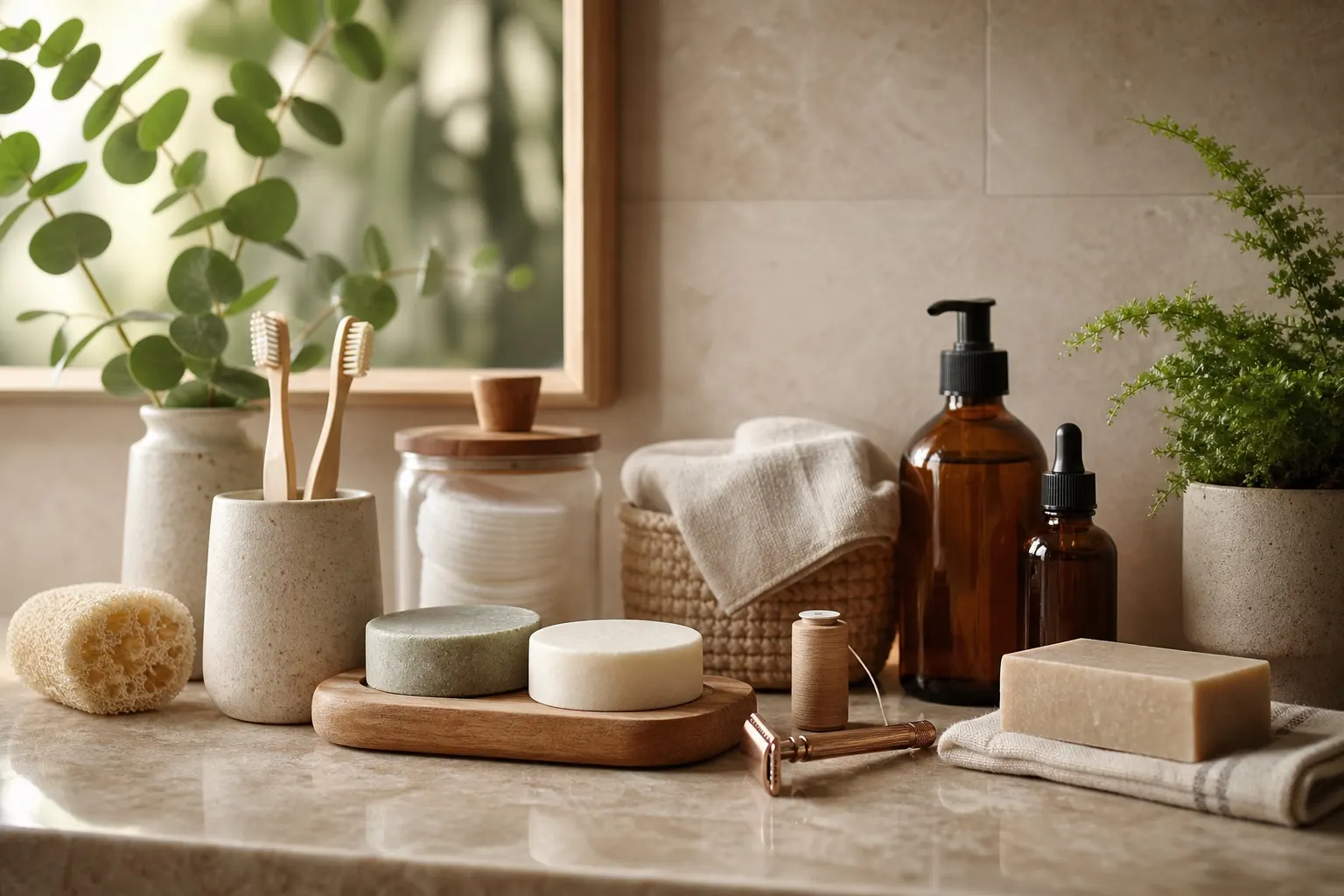
Body wash is the simplest place to begin. A plain bar soap usually costs less, lasts longer, and comes in paper instead of a plastic bottle. If your skin is dry or sensitive, choose an unscented bar and avoid turning the swap into a fragrance experiment.
Hair care is more personal. A shampoo bar can be excellent if it matches your hair type and water hardness. If bars leave your hair waxy, refillable liquid shampoo is still a strong low-waste option. The point is less plastic, not suffering through a product that makes every wash day annoying.
If you already like the basics, our plastic-free bathroom swaps guide has a broader list to work through at your own pace.
Dental Swaps: Worth It, But Be Picky
Dental care is where low-waste advice often gets too cute. Toothpaste tablets, compostable floss, bamboo toothbrushes, and metal tongue scrapers can all help, but your mouth still needs products you will use consistently.
Toothpaste tablets are portable and usually packaged in glass, paper, or aluminum. They are not for everyone. Some people miss the foam and texture of paste, and that is fine. If tablets make you brush less thoroughly, they are not the right swap.
Bamboo toothbrushes are an easy change if you like a basic manual brush. Look for soft bristles and a handle that feels comfortable. The bristles are usually nylon, so remove them before composting the handle if your local compost system accepts bamboo at all.
Floss is trickier. Many plastic-free flosses use silk, which is not vegan, or plant-based materials that can break more easily. Try one spool before buying a multi-pack. A compact refillable floss holder is useful only if the floss itself works for your teeth.
For dental product safety and oral health basics, the American Dental Association is a better reference than social media trends.
Shaving, Period Care, and Daily Reusables
Shaving is one of the best long-term money savers. A safety razor has a higher upfront cost, but replacement blades are cheap and come with far less plastic. Go slowly at first. The angle and pressure are different from a cartridge razor. A basic safety razor starter kit is enough; you do not need the fanciest handle.
For makeup removal or toner, washable cotton rounds can replace disposable pads. Keep a small mesh laundry bag nearby so they do not vanish in the wash. If you use heavy waterproof makeup, keep a few disposables for stubborn cleanup instead of pretending one reusable pad solves every situation.
Period care is deeply personal. Menstrual cups, discs, and period underwear can reduce waste dramatically, but comfort, anatomy, flow, and laundry access matter. Start with one option, not a drawer full of products. If reusable period care is not a good fit, organic cotton disposables or larger-value packs can still reduce some packaging churn.
Build a Bathroom System, Not a Product Shrine
Most low-waste bathrooms fail because storage gets messy. Bars sit in water. Refills get forgotten. Backups multiply. The fix is boring and effective: give every category one place to live.
Use a draining soap dish for bars. Keep refill pouches or bulk bottles in one bin under the sink. Store travel-size empties together so you can refill them instead of buying new minis before every trip. A small bamboo soap dish or metal shower rack can make bars last much longer because they dry between uses.
Do a 10-minute cabinet audit before buying anything. Toss expired products, finish the almost-empty bottles, and write down the three items you actually need next. This prevents the most common low-waste mistake: buying a new "sustainable" version while the old plastic version sits half-used for a year.
What to Skip at First
Skip anything that requires a personality change. If you hate bar conditioner, use refillable liquid. If toothpaste tablets make your mouth feel unclean, use regular paste until you find a better option. If a refill store is 40 minutes away, the travel time and fuel may cancel out the benefit.
Also skip matching containers unless they solve a real problem. Reusing a clean jar for cotton rounds is better than buying a new jar because it looks more "eco." The most sustainable bathroom is one you can maintain on a tired weekday.
FAQ
What is the easiest plastic-free bathroom swap?
Bar soap is the easiest first swap. It is widely available, inexpensive, and usually replaces a plastic body wash bottle without changing your routine much.
Are shampoo bars better than refillable shampoo?
It depends on your hair and water. Shampoo bars usually use less packaging, but refillable liquid shampoo is better if bars leave buildup or make your hair harder to manage.
How do I keep a plastic-free bathroom from feeling cluttered?
Use up products before replacing them, limit backups to one per category, and give bars a dry storage spot. A simple system matters more than buying every swap at once.
---
A plastic-free bathroom routine is not about perfection. It is a steady replacement plan: use what you have, swap what runs out, and keep only the changes that make daily life cleaner, calmer, and less wasteful.