Your kitchen might get all the zero waste attention, but your bathroom is quietly one of the biggest plastic offenders in your home. Think about it: shampoo bottles, disposable razors, cotton swabs, toothpaste tubes, face wipes — most of it ends up in a landfill.
This post contains affiliate links. We may earn a small commission at no extra cost to you.The good news? Swapping out bathroom products is one of the easiest places to start your zero waste journey. You don't need to overhaul everything at once. Just replace items as they run out, and within a few months, you'll barely recognize your old routine.
Here's how to do it without spending a fortune or sacrificing your morning routine.
Start With the Big Three: Shampoo, Soap, and Toothpaste
These are the products you go through fastest, which means they generate the most waste — and they're also the easiest to swap.
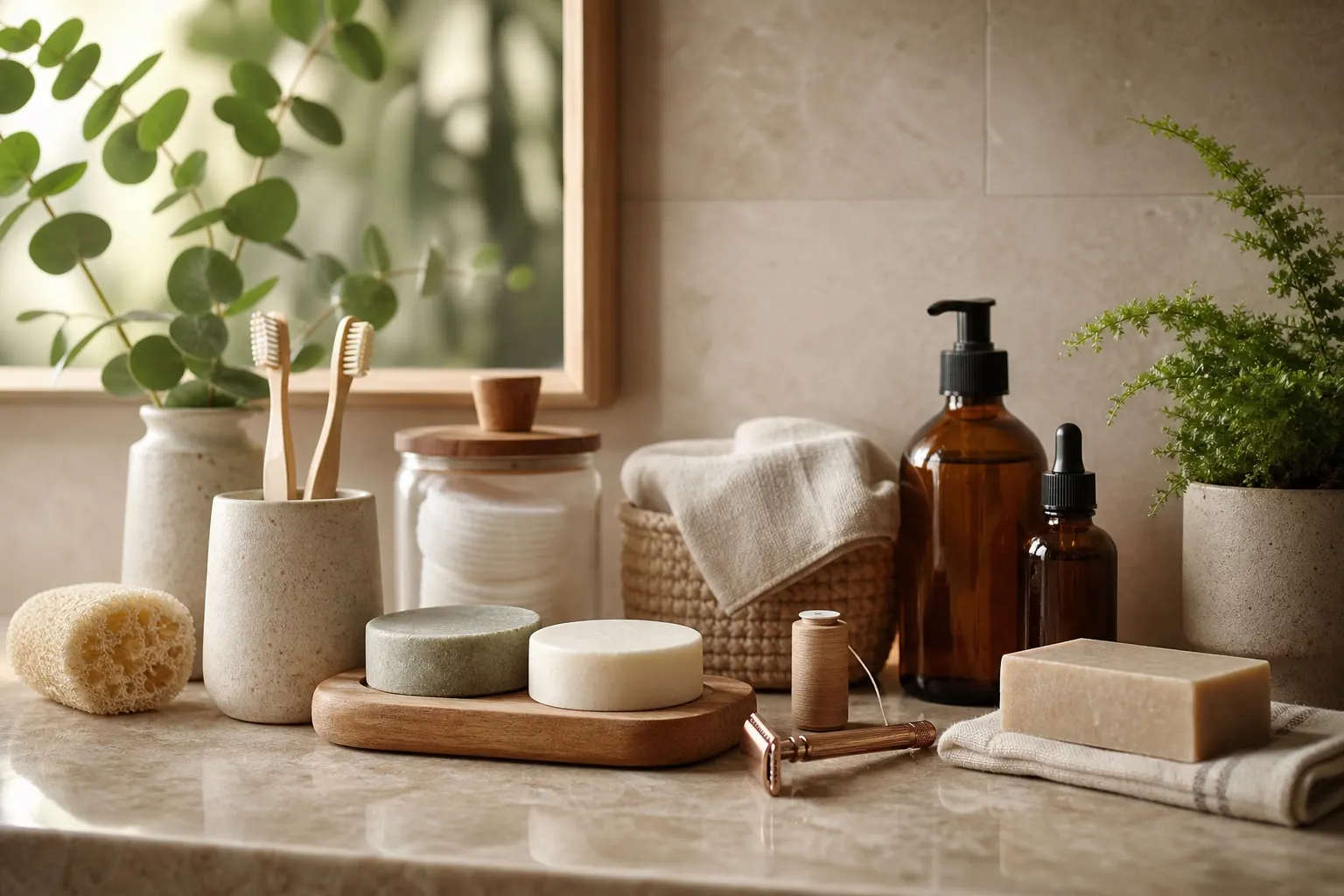
Shampoo and conditioner bars have come a long way. They last 2-3 times longer than a bottle of liquid shampoo, they travel without leaking, and they eliminate plastic entirely. Brands like Ethique and HiBAR make bars for every hair type, from curly to color-treated.For body wash, a simple bar soap does the job beautifully. Look for options with minimal packaging — many artisan soap makers wrap in paper or sell completely naked.
Toothpaste tablets are another easy win. Brands like Bite and Unpaste ship in glass jars with metal lids. You chew a tablet, brush normally, and skip the plastic tube entirely. If tablets feel too weird, look for toothpaste in aluminum tubes — they're infinitely recyclable, unlike the mixed-material tubes most brands use.Razors: The Swap That Pays for Itself
Disposable razors are an environmental nightmare. Americans throw away about 2 billion of them every year, and they're made from a mix of plastic and metal that can't be recycled.
A stainless steel safety razor is the single best swap you can make in your bathroom. The upfront cost is around $25-40, but replacement blades cost pennies — literally 10 to 20 cents each. Over a year, you'll save money compared to buying cartridge refills, and you'll divert dozens of plastic razors from the trash.
The learning curve is about two shaves. Go slow, let the weight of the razor do the work, and you'll wonder why you ever used anything else.
Cotton and Personal Care
Single-use cotton rounds, cotton swabs, and makeup wipes add up fast. Here's what works instead:
Reusable cotton rounds made from organic cotton or bamboo fabric are perfect for toner, makeup removal, or applying skincare. Toss them in a mesh laundry bag and wash with your regular load. A set of 16-20 rounds will last years. Bamboo cotton swabs are a painless switch. They work identically to plastic ones but compost completely. You can find them at most grocery stores now, or grab a multi-pack of bamboo cotton swabs to stock up.For makeup removal, a microfiber cloth and water can replace an entire pack of disposable wipes. It sounds too simple, but the microfiber grabs onto makeup and sunscreen surprisingly well.
The Toilet Paper Question
Let's address it: yes, there are more sustainable options, and no, you don't have to use leaves.
Bamboo toilet paper is the most practical upgrade. Bamboo grows exponentially faster than the trees used for conventional toilet paper, requires no pesticides, and uses less water. Brands like Who Gives a Crap and Cloud Paper ship in paper-wrapped rolls with zero plastic. The texture is comparable to mid-range conventional brands — you're not sacrificing comfort.
If you're feeling adventurous, a bidet attachment is the ultimate move. They install in minutes, cost $30-60, and reduce your toilet paper usage by about 80%. The environmental math is staggering when you consider that making a single roll of toilet paper requires 37 gallons of water.
Storage and Organization
Going zero waste in the bathroom often means switching from bottles to bars, jars, and loose items — which means you might need to rethink how you store things.
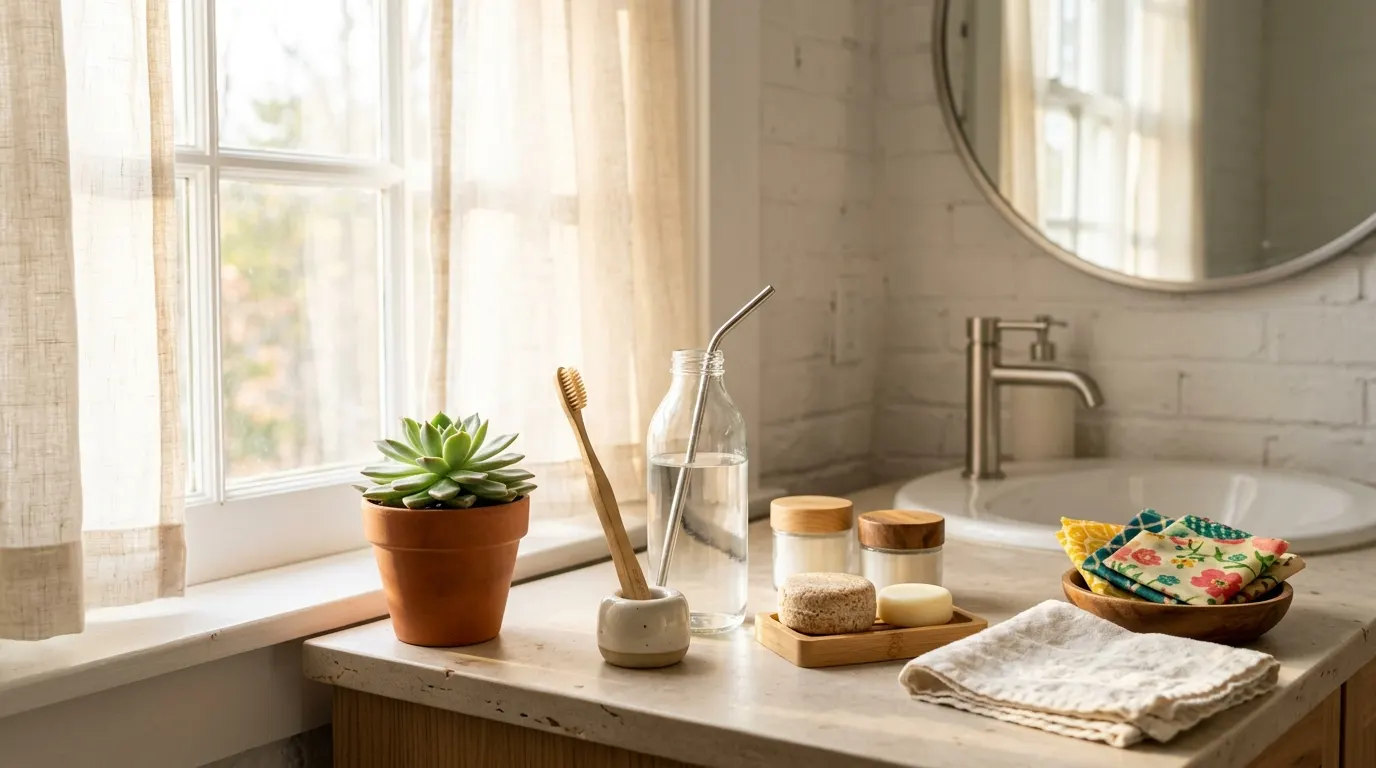
A simple bamboo bathroom organizer keeps everything tidy without adding plastic to the equation. Bamboo is naturally moisture-resistant, so it holds up well in humid bathrooms. Use small glass jars for toothpaste tablets, cotton swabs, and hair ties.
Mason jars work great as catchalls, and they look better on a shelf than a bunch of mismatched plastic containers ever did.
What About Cleaning the Bathroom?
Most bathroom cleaners come in plastic spray bottles filled with chemicals you can't pronounce. Two easy alternatives:
DIY cleaner: Mix equal parts white vinegar and water in a glass spray bottle. Add a few drops of tea tree oil for extra antibacterial power. This handles mirrors, counters, and fixtures. Concentrated refills: Brands like Blueland and Cleancult sell tablet or powder refills that you mix with water in a reusable bottle. One tablet replaces an entire spray bottle, and they ship in compostable packaging.For scrubbing, swap your plastic-bristle brush for a wooden one with natural fibers. They work just as well and compost at end of life.
The Mindset Shift
Zero waste bathroom swaps aren't about perfection. You'll still have some packaging. You might still buy a product in a plastic container because it works best for your skin or hair. That's fine.
The goal is progress: fewer disposables, less plastic, and more intentional purchasing. When you finish a product, ask yourself if there's a reusable or package-free alternative before automatically rebuying the same thing.
Most people find that their zero waste bathroom actually looks and feels better than it did before — cleaner shelves, fewer products, and the quiet satisfaction of knowing your morning routine isn't generating a trash bag of waste every month.
Start with one swap this week. The rest will follow naturally.