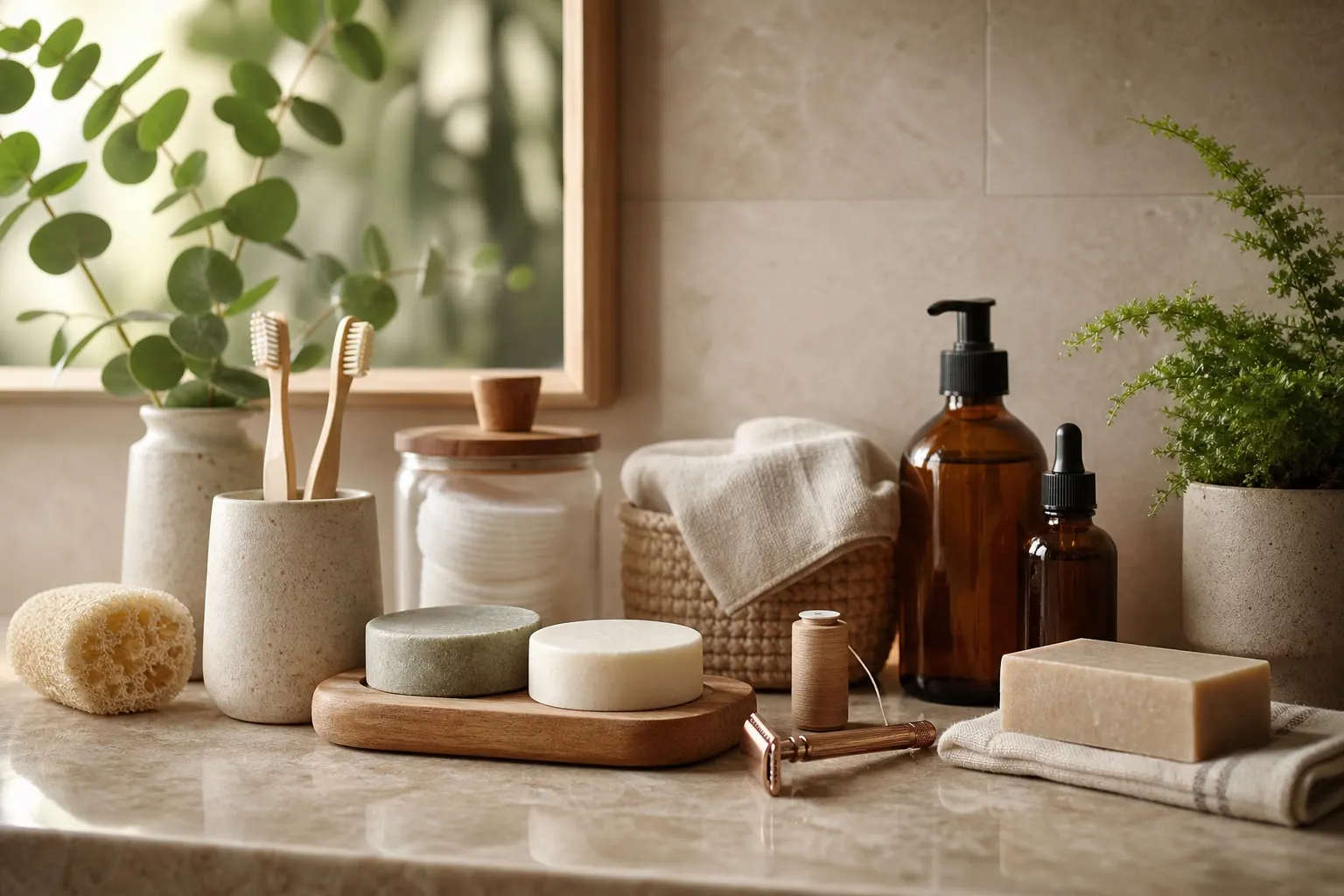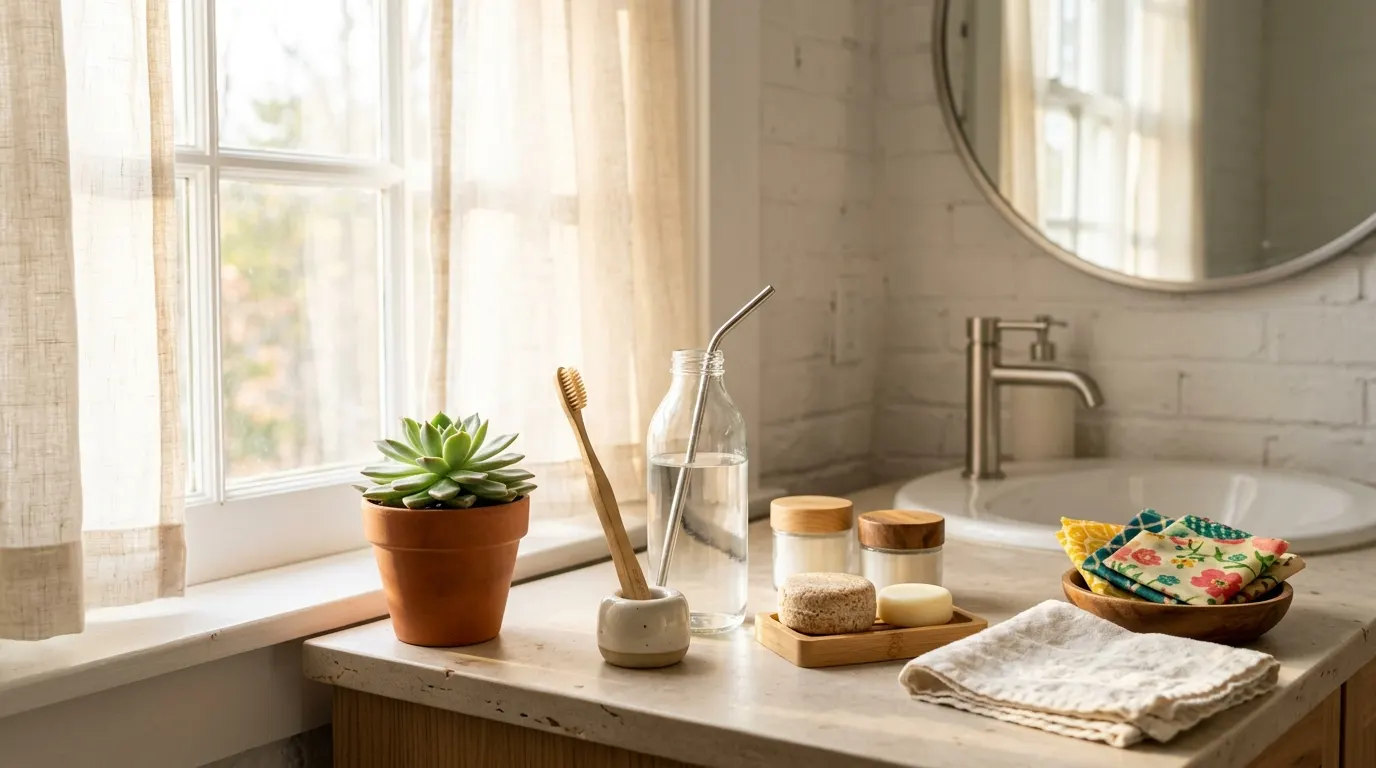
The average American generates about 4.9 pounds of waste per day — and a surprising chunk of it happens before 9 AM. Toothpaste tubes, cotton swabs, single-serve coffee pods, paper towels, disposable razors: your morning routine is quietly one of the biggest waste generators in your home.
This post contains affiliate links. We may earn a small commission at no extra cost to you. TL;DR: A zero-waste morning routine isn't about perfection. Swap 3–4 high-frequency items — shampoo bars, a safety razor, a reusable travel mug, and a bamboo toothbrush — and you'll cut 60–70% of your daily morning trash in a single week. Most swaps cost the same or less over three months.Why Morning Routines Matter for Waste Reduction
Morning is high-frequency and high-repetition. You do the same things every single day, which means small improvements compound fast. A disposable razor head swapped for a safety blade saves 52 blades per year. A plastic toothbrush replaced with bamboo saves one unit every three months — not much alone, but multiplied across a household and a lifetime, it adds up to a real number.
The other reason to start here: mornings are habit-driven. Once a swap is in place, you stop thinking about it. You don't have to choose the sustainable option each day — it just is your option.
Swap 1: Bamboo Toothbrush + Toothpaste Tabs
Conventional toothbrushes are made from nylon and polypropylene — neither is recyclable through standard curbside programs. You're throwing away a plastic device every 3 months for your entire life.
A bamboo toothbrush handles biodegrades. The bristles are still typically nylon (fully natural bristles don't clean well), but switching the handle alone removes the bulk of the plastic. Pair it with toothpaste tabs — small, dissolvable tablets in glass or cardboard packaging — and you've also eliminated the toothpaste tube, which is one of the least-recyclable items in personal care.
Bamboo toothbrush and toothpaste tab sets are now widely available and cost roughly the same as conventional drugstore equivalents when you buy in bulk.Swap 2: Safety Razor
Disposable razors and cartridge systems are a masterclass in planned waste. The handles are designed to be replaced, the cartridges can't be recycled, and the cost-per-shave is high.
A stainless steel safety razor has a one-time handle cost ($20–40) and uses double-edge blades that cost under $0.30 each. One blade typically lasts 5–7 shaves. The math works out to about $5–8 per year versus $60–100 for cartridges. The shave quality is also genuinely better — single-blade geometry cuts more cleanly with fewer passes.
Used blades go in a blade bank (a small tin you fill over months, then drop at a metal recycler). Zero plastic, zero landfill.
A good starter safety razor kit includes the handle, a blade sampler, and a storage stand.
Swap 3: Solid Shampoo and Conditioner Bars
This is the highest-volume plastic swap available in your bathroom. Most households go through 1–2 shampoo bottles and 1–2 conditioner bottles per month. That's 24–48 plastic bottles per year from a single household.
Solid bars eliminate all of it. One shampoo bar lasts 60–80 washes when stored dry between uses, which equals roughly 2–3 liquid bottles. The learning curve is real: hair may feel different for the first 1–2 weeks as it adjusts from silicone-coating to natural alternatives. That transition phase is why so many people quit too early — push through it.
Look for bars without SLS if you have a sensitive scalp, and conditioner bars with shea butter or cocoa butter for dry or coarse hair. We covered the full details in our guide to plastic-free bathroom swaps, which also addresses what to look for in ingredients.
Swap 4: Reusable Travel Mug (and a Proper Coffee Setup)
Single-serve plastic coffee pods are the most-discussed zero-waste kitchen issue, but the disposable cup is more insidious. Most paper cups for coffee are lined with a thin polyethylene film that makes them non-recyclable. Billions go to landfill annually in the US alone.
A quality insulated travel mug keeps coffee hot for hours and pays for itself in two weeks if your coffee shop offers a discount for bringing your own (many do — typically $0.25–0.50 off per cup). Stainless steel insulated travel mugs are the most durable and cleanest-tasting option — avoid plastic-lined interiors.
At home, a reusable coffee pod or a simple French press eliminates capsule waste entirely and typically brews better coffee.
Swap 5: Cloth Rounds and a Bar Cleanser
Disposable cotton rounds are a daily waste item hiding in plain sight. You use them for makeup removal, toner, and spot treatments — sometimes multiple per morning — and throw each one away.
Washable cotton or bamboo rounds do the same job and go in the laundry. A set of 12–20 rounds costs $12–18 and lasts for years. Pair them with a face cleanser bar (paper-wrapped, no plastic pump bottle) and you've removed another entire category of bathroom plastic from your morning.
Swap 6: Paper-Packaged or Refillable Deodorant
Conventional deodorant sticks come in plastic tubes that are almost never accepted for recycling. The plastic-free alternatives have improved substantially: cardboard push-up tubes, cream deodorants in glass jars, and refillable stainless steel applicators are all now accessible at mid-range prices.
Allow 2–4 weeks for your body to adjust to aluminum-free formulas — the microbiome shift takes time, and most people who give up early do so during the transition phase rather than when the product has settled in.
Swap 7: Ditch the Paper Towel Habit
Morning kitchen cleanups — wiping the counter, cleaning up a spill, patting dry — are where paper towels quietly vanish by the roll. The average US household uses 80+ rolls per year, almost none of which is recycled.
A set of washable cloth squares (cut-up old t-shirts work perfectly) or Swedish dishcloths handles the same tasks. Keep them in a small basket near the sink so the swap is frictionless. Full cost-savings breakdown on this and similar swaps in our guide to reusable products that actually save money.
Swap 8: Compostable or Refillable Hand Soap
The liquid soap dispenser on your kitchen or bathroom counter is another recurring plastic purchase. Two options work well: bar soap (zero plastic, often cheaper) or a refillable glass/stainless dispenser you fill from a large-format bulk liquid soap. Buying one 64-oz bottle instead of four 16-oz bottles typically cuts both cost and packaging by 60–70%.
According to the EPA's most recent materials data, HDPE (the plastic in most soap bottles) has a recycling rate under 30% — meaning most of those bottles end up in landfill regardless of how carefully you sort your recycling.
Putting It Together: A Realistic Transition Plan
Don't buy everything at once. Use what you have until it runs out, then replace it with a zero-waste alternative. A phased approach over 3–4 months means you're never wasting products you already own, and the cost is spread out.
Prioritize in order of how frequently you replace them: shampoo/conditioner, disposable cups, toothbrush, razor. These four swaps alone will eliminate 80% of your morning waste by the end of the year.
---
FAQ
How long does it really take to switch to a zero-waste morning routine?
Full transition takes 2–4 months if you phase it in as products run out — which is the right approach. Don't throw away half-full products to start fresh. If you buy everything at once and replace immediately, you can be mostly zero-waste in the morning within a couple of weeks, but you'll have wasted the resources embedded in the products you discarded.
Are zero-waste morning products harder to find?
Not anymore. Most mainstream retailers stock bamboo toothbrushes, shampoo bars, and safety razors. Online options via Amazon or specialty eco stores cover the remaining gaps. If you need a one-stop option, look for plastic-free starter kits that bundle the core bathroom swaps together.
Do zero-waste swaps work as well as conventional products?
Mostly yes, with a short adjustment period for some (hair, deodorant). The products that differ most are deodorant (2–4 week microbiome adjustment) and shampoo bars (1–2 week hair transition). Safety razors, bar soap, cloth rounds, and travel mugs typically perform identically or better from day one.